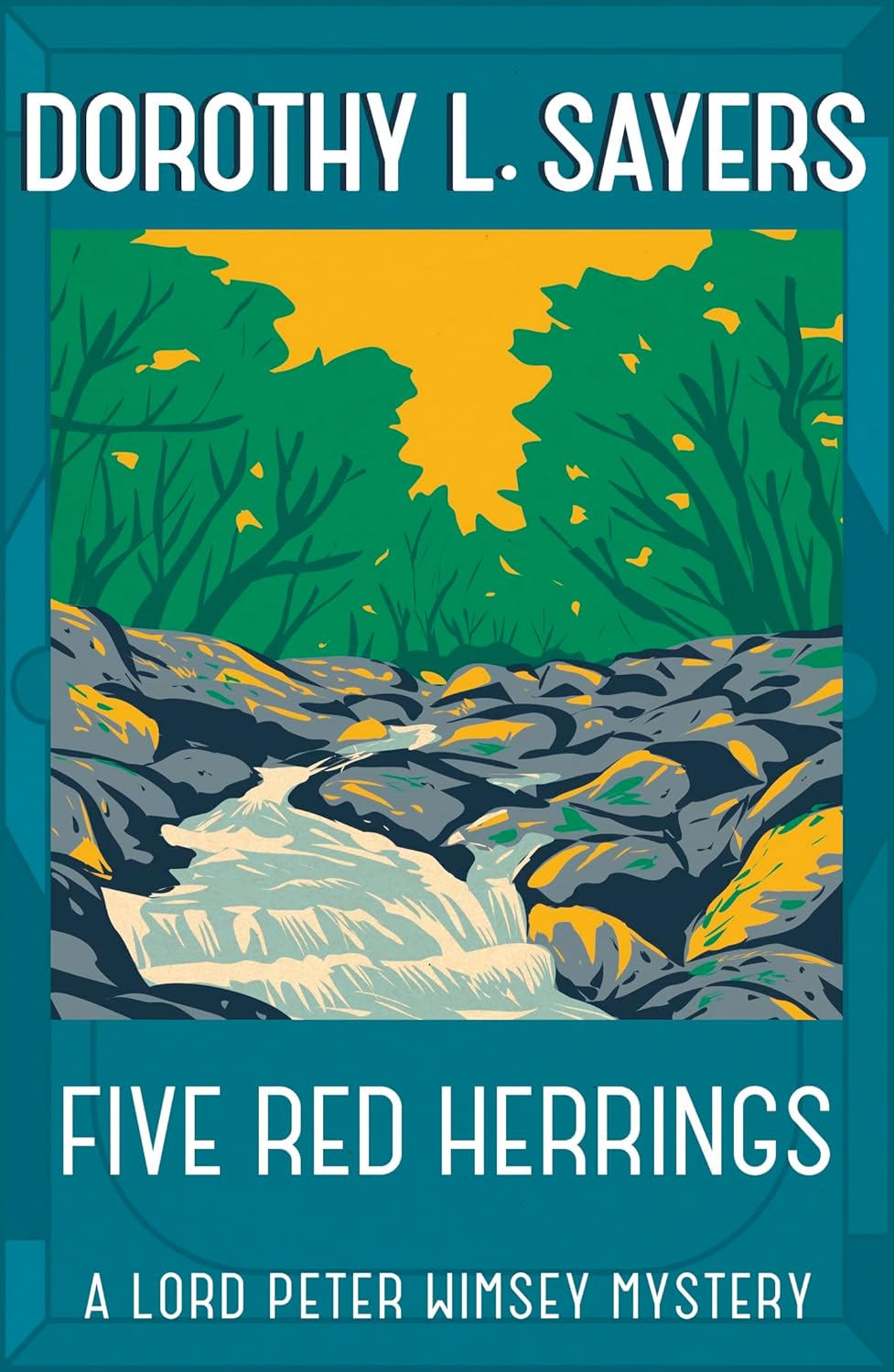
The phrase ‘red herring’, so important to crime writers, owes much to Kirkcudbright. According to the historians, the phrase was popularised by William Cobbet, a journalist, in 1807, used to mean how inaccurate information was distracting public discussion, and red herrings soon found their way into crime fiction, notably in the novel Five Red Herrings, written by legendary crime author Dorothy L Sayers, which sees her famous investigator Lord Peter Wimsey’s fishing holiday interrupted when he investigates the murder of a local artist in Kirkcudbright.
The novel, which was published in 1931 and is still available in ebook and hardcopy formats, begins with the death of Sandy Campbell, a drunkard loathed for his boorish behaviour, whose body is found at the bottom of a steep hill. Given that his easel is at the top of the hill, townsfolk assume that he fell while painting but Lord Peter disagrees and his suspicion is strengthened by the fact that six people hated Campbell enough to become murder suspects.
The novel, which tells how the gentleman sleuth clears five of the suspects and reveals the sixth as one of the most ingenious murderers he has faced, continues to be regarded as a classic of the genre, not least for its brilliant use of Red Herrings to fool the reader.
The 1975 BBC four-part TV mini-series Five Red Herrings (starring Ian Carmichael as Lord Peter Wimsey) was filmed on location in and around Kirkcudbright, including Broughton House, the Selkirk Arms Hotel, High Street, the Sheriff Court and the Big Water of Fleet Viaduct.
 Kirkcudbright Crime Writing
Leave a comment